
hermes sandals men Materials Explained Leather Types
Hermès sandals for men: materials explained in plain terms
Hermès men’s sandals look simple, but the leather choice defines how they age, feel and perform. This guide cuts through marketing language and explains the exact leathers Hermès uses, what each leather does on a sandal, and how that affects wear, maintenance and long-term value.
Hermès builds pieces like the Oran and Izmir from a small palette of premium hides; the differences are tactile and practical, not just cosmetic. Expect discussions about grain, finish, patina, scratch resistance and lining/sole materials rather than vague luxury-speak. Read this if you want to pick the right leather for daily use, travel or occasional dress-up, and to know what to do once you own them.
This introduction sets the framework: leathers fall into two functional groups—structured, shape-stable hides that resist scratches, and softer, more expressive hides that develop patina and need gentle care. Below you’ll find direct comparisons, maintenance rules and an expert warning that prevents a very common mistake owners make.
Throughout, references are to Hermès’ common treatments: Box calf (box), Epsom, Swift, Togo, Clemence, Barenia and Vache Hunter/vegetable-tanned finishes; I’ll also note lining and sole materials when they matter for performance. No fluff, just the attributes you will feel and care for every time you step into them.
What leather types does Hermès use for men’s sandals?
Hermès primarily uses calf-derived and goat-derived leathers for men’s sandals: Box calf, Veau Swift (Swift), Togo, Clemence, Epsom, Barenia and occasional Vache or Chevre variations. Each leather is distinct in grain, finish and how it reacts to wear and elements.
Box calf is a smooth, tightly grained calfskin often finished with a glossy or semi-gloss surface; it reads dressy and will show surface scratches more readily. Swift is a soft, almost silky calfskin with a fine grain that develops subtle patina and fewer surface reflections; it picks up marks but they can often be buffed. Togo is a pebbled calfskin with raised grain that resists abrasion and holds shape; it’s a workhorse for everyday items. Clemence is softer and heavier than Togo, with a relaxed drape and matte look; it’s comfortable but can crease. Epsom is a pressed, embossed calfskin with a oransandals.com/product-category/men-shoes/ uniform, heat-stamped grain; it’s lightweight, structured and more scratch-resistant. Barenia is a vegetable-tanned, natural-finish hide historically used in saddlery and prized for deep patina over time. Chevre (goatskin) appears occasionally: tighter grain, lighter weight and good durability for small parts and linings.
Hermès also uses calfskin linings and leather footbeds on many sandals; some sport rubber outsoles or leather soles with rubber inserts depending on model and market. Construction details—edge painting, glued vs stitched strap attachment, and sole thickness—interact with leather choice to affect longevity and comfort.
Model names matter. The Oran (the H-cut slide) is most commonly offered across multiple leathers; Izmir and Oasis straps can be built with similar hides but sometimes have different inner reinforcements or finishing. Always check the product spec sheet if exact hide naming is essential for your purchase or care plan.
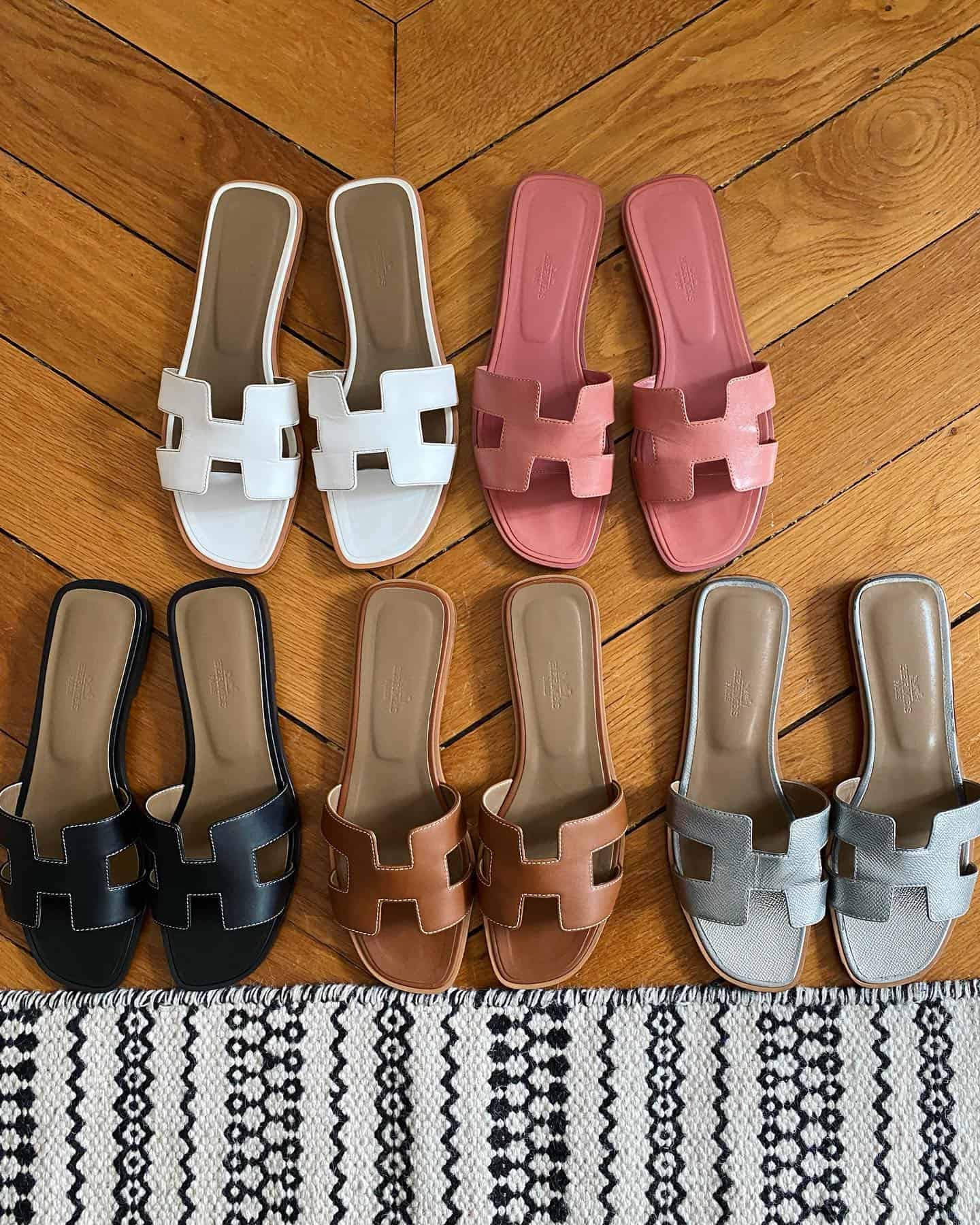
Which leather is best for daily wear?
For everyday men’s sandals that need low maintenance and resilience, Togo and Epsom are the top picks; Clemence follows if you prioritize comfort over scratch resistance. These leathers balance toughness, shape retention and forgiving surface behavior.
Togo resists scratches because its pronounced pebble grain hides small abrasions; it also stretches minimally and keeps straps looking structured. Epsom’s embossed grain and pigmented finish resist scuffs and are easy to wipe clean, making it ideal for travel or wet weather days. Clemence and Swift will feel softer on the foot and develop an attractive patina, but both show surface marks more readily; they demand gentle rotation and regular conditioning. Box calf is elegant and pairs well with smart-casual looks, but it’s more vulnerable to scuffs on sandals where the toe and strap meet abrasive surfaces.
If you walk long distances or use sandals as primary summer footwear, prioritize Togo or Epsom for the upper and choose a rubber-soled variant or a sandal with a protected leather outsole. If you want a refined look for moderate use—weekend dinners, short walks—Swift or Box calf will reward careful ownership with a richer finish over time.
Color choice intersects with leather. Dark, pigmented leathers hide stains but show polished scuffs; light aniline or natural Barenia will darken and patina but also stain from salt and sunscreen, so choose based on how you actually use the sandals.
How do leather types affect fit, patina and maintenance?
Leather type determines how much a strap will stretch, how fast it breaks in, whether it will darken or buff out, and what cleaners or conditioners to use. That’s the practical magic; it changes how the sandal fits week to week and year to year.
Structured hides like Epsom and Togo break in less and therefore maintain initial fit longer; softer hides like Clemence and Swift will relax and conform to your foot, which may be more comfortable but can lead to looser straps over months. Patina behavior varies: Barenia and Swift will develop depth and sheen with oils from contact and polish; Epsom and pigmented finishes resist patina and keep a flatter, uniform appearance. For maintenance, use a neutral, leather-specific cleaner for pigmented leathers and a light aniline conditioner for soft, open-pore leathers; avoid general household oils that can saturate and darken the hide irreversibly. If the sandal gets wet, let it air dry naturally away from heaters and apply cream sparingly—over-conditioning softens structure and can loosen glued joints.
Regular rotation and minimal exposure to direct sun or chlorinated water extends life regardless of hide. Sole condition and edge paint wear often determine repair timelines more than upper leather; watch the sole first and the straps second.
Comparison table: leather characteristics and care
This table summarizes common Hermès leathers for men’s sandals across scratch resistance, softness, patina tendency and maintenance frequency. Use it as a quick decision matrix for purchase and care planning.
| Leather | Scratch resistance | Softness/comfort | Patina tendency | Maintenance frequency |
|---|---|---|---|---|
| Togo | High | Medium | Low–medium | Low (wipe & occasional cream) |
| Epsom | High | Low–medium (structured) | Low | Low (wipe clean) |
| Swift | Low | High | High (soft sheen) | Medium (gentle conditioning) |
| Clemence | Medium | High | Medium–high | Medium (conditioning, avoid abrasives) |
| Box calf | Low | Low–medium | Low (shows scratches) | Medium (polish and careful cleaning) |
| Barenia | Medium | Medium | Very high (deep patina) | Medium (gentle oils occasionally) |
The table is directional: environmental exposure, dye quality and edge finishing will alter outcomes. For maintenance, a light touch is essential; over-cleaning or heavy oils are the primary cause of irreversible surface changes. If a strap edge peels, seek a professional cobbler with experience on luxury leathers rather than DIY fixes—Hermès leathers take specialized edge paint and adhesives.
Expert tip
\”Never store Hermès leathers in airtight plastic or apply household oils—both quickly ruin the finish; instead, keep them in a breathable dust bag and treat open-pore hides with a very small amount of neutral leather cream only when dry.\” This prevents trapped moisture, accelerated mold risk and irreversible darkening.
Do not use Vaseline, coconut oil or olive oil as conditioning shortcuts; they turn leather sticky and attract dirt. For scuffs on pigmented leathers, a soft, damp cloth and light rubbing often do more good than aggressive polish. For soft aniline hides, use minimal product and let natural oils from wear build patina—over-conditioning flattens grain and weakens strap glue. If you need a resoling or edge repaint for sandals, pick a cobbler who documents the replacement materials—good repairs preserve geometry and resale value.
Little-known facts and final recommendations
Fact: Barenia was originally developed for saddlery and is vegetable-tanned, so it develops a richer, darker patina than most pigmented leathers; it is resilient but will show water marks if untreated. This makes Barenia a rare but compelling choice for someone who wants character rather than a static finish.
Fact: Epsom is heat-stamped, meaning the grain comes from an embossing process—not natural pebbling—so it resists dents and keeps a perfectly even surface, which is why travel-oriented Hermès pieces often use it. That pressed grain also sheds water better than open-pore skins.
Fact: Swift is actually a calfskin treated to a soft, velvety feel and it responds uniquely to light rubbing—marks often disappear with fingertip buffing, which is a useful daily trick. Many owners prefer Swift for sandals worn less aggressively because it looks better with natural hand-contact over time.
Recommendation: If you intend to wear your Hermès sandals most days and want low fuss, choose Togo or Epsom in a darker shade and maintain with wipe-downs. If you prefer a soft, luxurious seat on the foot and like evolving character, choose Clemence or Swift but plan rotation and careful conditioning. For occasional, smart use where scratches are acceptable, Box calf reads dressiest. Always check lining and sole construction: leather footbeds paired with thin outsoles need resoling sooner; rubberized soles add practicality.
Choose the leather that matches your lifestyle, not just the color. Match maintenance routines to the hide: pigmented/embossed equals wipe-clean; open-grain equals gentle conditioner and rotation. That approach keeps Hermès sandals performing well and looking right for years.